Blog Archives
Iré a Santiago [I’ll Go to Santiago] (1964)
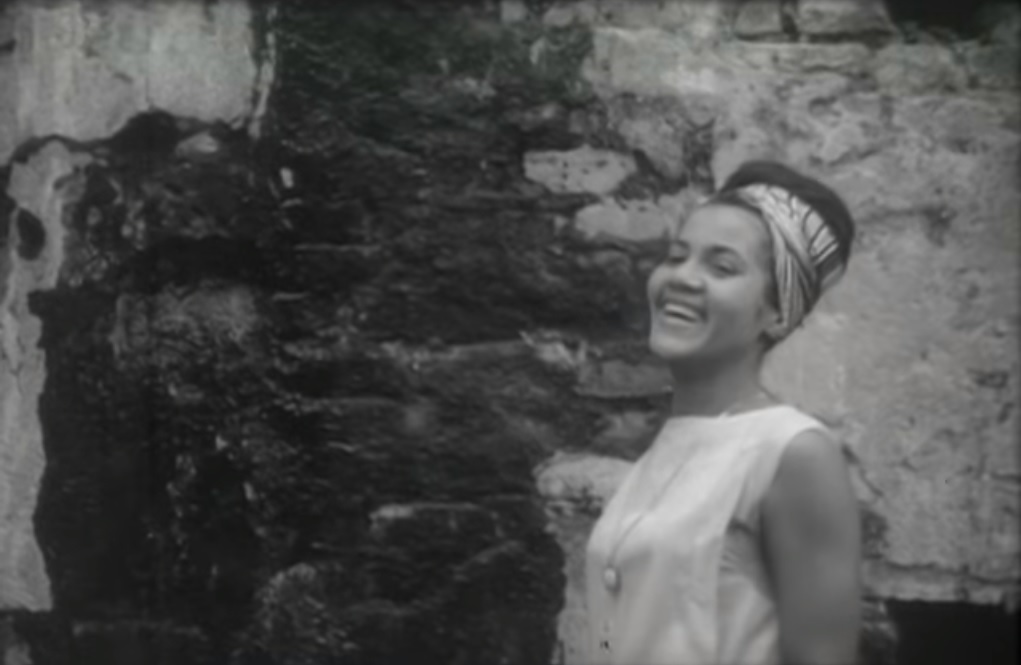
In 1959, rebel forces led by Fidel Castro overthrew Fulgencio Batista and the revolutionary government took control. The new government immediately began its efforts to transform Cuba, with the goal of rebuilding it as a Communist nation. One of the government’s key initiatives was the creation of the Instituto Cubano del Arte e Industria Cinematográficos (ICAIC). Film was seen as an important way to educate and animate the public as the country was entering a period of rapid change.
Just like the first decade of Soviet cinema, the first decade of Cuban cinema after the revolution was a time of exploration and innovation. A number of talented filmmakers came out of ICAIC, but unfortunately few of them are remembered today. One of the most gifted was Sara Gómez. Her body of work isn’t large. During the 60s and early 70s she made a number of short films. She died in 1974 before completing her only feature, De cierta manera. But the work Gómez left behind is well worth looking at.
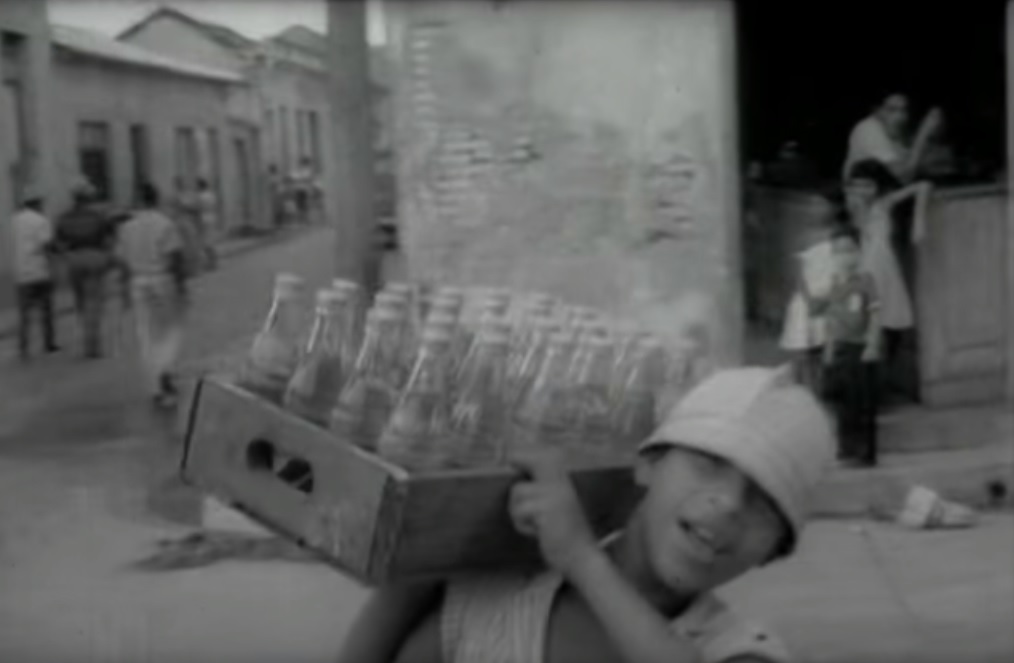
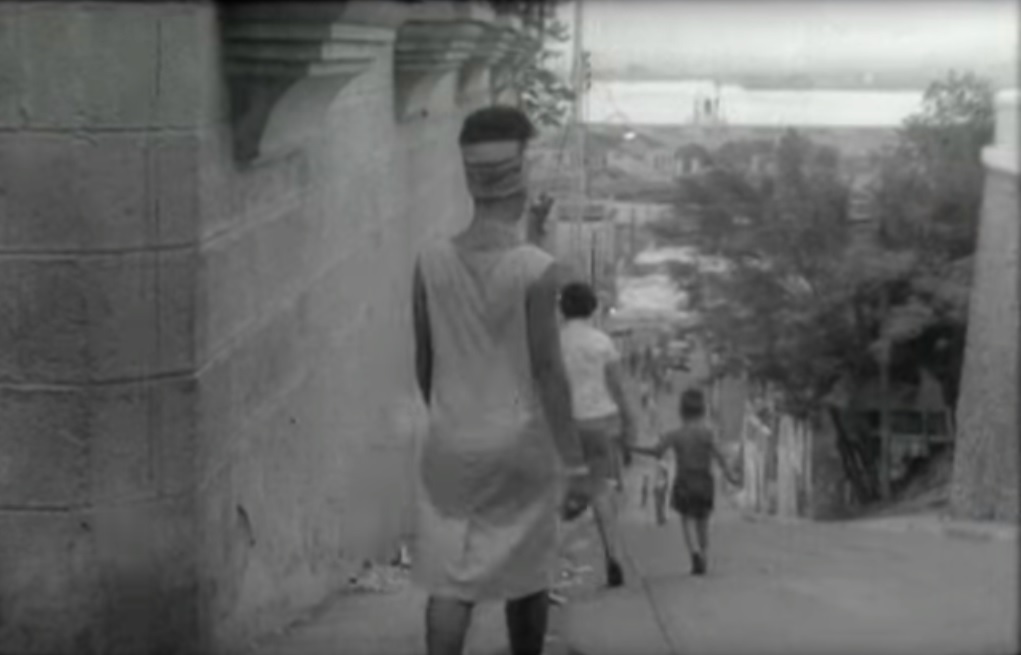
Iré a Santiago is a joyous short celebrating the people and the culture of the city named in the title. It’s loose, energetic and spontaneous, with the camera wandering through bustling neighborhoods, pausing in a street market, spying on people in a café. The photography and editing are rough, but the images Gómez captures are lively and dynamic. Unlike other documentary filmmakers, she doesn’t try to pretend that she’s standing outside of the world she’s shooting, observing it all objectively. Some people wave at the camera, others try to avoid it. One boy starts dancing when he realizes he’s being filmed. Gómez doesn’t cut these shots out. They show that the filmmakers are part of the life that’s swirling around them.
The film doesn’t have a tight structure. Gómez is interested in wandering around to see what she can find. After spending some time watching people in the streets, she moves on to the bay, and the narrator gives us some brief notes on its history, from the arrival of the Spanish to the beginning of the revolution. Then we get a quick rundown on places of interest, and end up in the middle of the carnival.

Aside from the cinematography, the other thing that energizes the movie is the music on the soundtrack. It’s an eclectic mix of sweet melodies and dense percussion. And the people move to the music. In the carnival scene at the end, we see a row of men playing congas, a horn section blowing brassy punctuation, and dancers swaying to the driving rhythms. This isn’t just a documentary, it’s a celebration.
…..
The web site ReMezcla offers a short piece on Sara Gómez. In addition to a brief bio, it has links to some of the director’s films, including Iré a Santiago. You should know that the print doesn’t have subtitles, but please don’t let stop you. If you look at the images and listen to the sounds, you’ll be getting most of what the filmmaker is trying to say.
Among the films offered is Gómez’ only feature, De cierta manera. It’s an original and complex movie, and a marvelous piece of filmmaking, but I hesitate to tell you to click the link because the print is terrible. Really what we need is to have somebody track down whatever elements still exist and do a real restoration. This is the only feature we have from one of Cuba’s most gifted filmmakers. It deserves to be seen the way Gómez envisioned it.
 Reality Is Scary