Dog Day Afternoon (1975)

In the mid-70s, the US seemed to be lost in a chaotic haze. The optimism of the 60s had faded. Vietnam had exposed Americans to the ugliest realities of the country’s military actions. Nixon had resigned. President Ford didn’t seem to have an agenda. A recession was dragging the economy down. Unemployment was high. And the certainties that Americans had embraced in the post-WWII era had been shredded by years of cultural upheaval.
Against this backdrop, the story of two hapless guys why try to rob a bank and end up trapped inside, holding the employees hostage, seems like a reflection of the country’s state of mind. A desperate story for desperate times.
Dog Day Afternoon was inspired by an actual bank robbery, which P. F. Kluge and Thomas Moore wrote about in a Life magazine article entitled “The Boys in the Bank”. Frank Pierson’s screenplay sticks fairly close to the facts. Director Sidney Lumet felt it was important to keep the film grounded in reality, and in his book Making Movies, he gives his account of how the script evolved over time. According to Lumet, in order create the feeling of real life unfolding on the screen, he told the actors that they needed to play the parts as close to themselves as possible, even encouraging them to wear their own clothes. Taking the director’s lead, one of the actors asked if they could use their own words. Though he had never allowed improvisation before, Lumet agreed.

Still using Pierson’s screenplay as the foundation, the actors were allowed to improvise in rehearsals, and the rehearsals were recorded. Each night, the script was reworked to incorporate dialogue that the actors had come up with during the day. This is likely one of the reasons that the film has such bracing spontaneity. Rather than speaking dialogue, the characters seem to be speaking their own words. Instead of watching scenes in a drama, we get the sense that we’re witnessing events as they unfold. As the botched bank robbery turns into a hostage situation, as the NYPD tries to figure out their next move, as the crowd on the street grows larger, it’s clear that no one is in control and there’s no way to predict what will happen next.
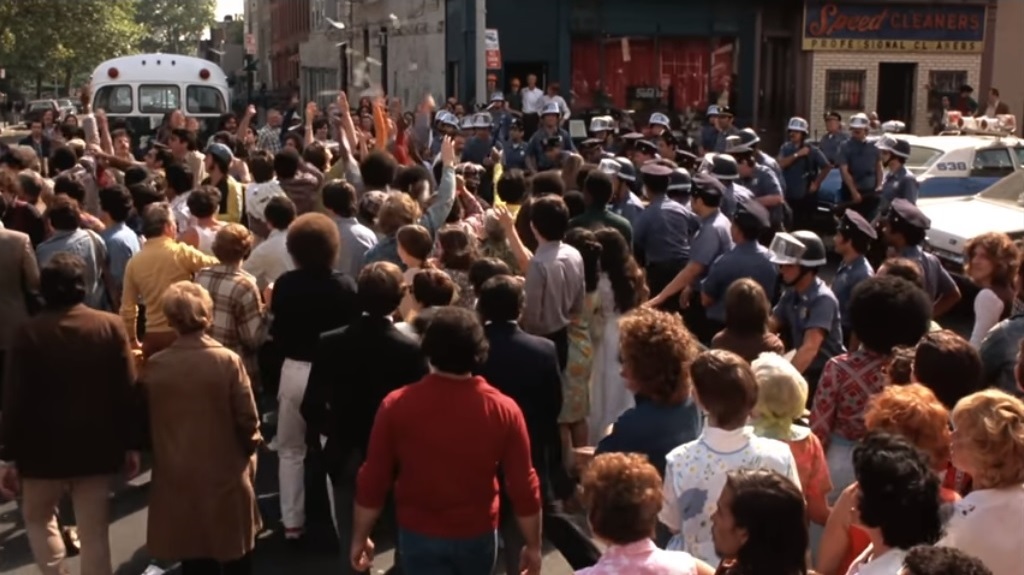
The photography reinforces the documentary feeling. Lumet and cinematographer Victor Kemper employed natural light wherever possible. The bank interiors are lit by fluorescents. For the night exteriors they relied on spotlights from emergency vehicles. And Dede Allen’s crisp, unobtrusive editing gives the film structure without making it seem forced. Dog Day Afternoon doesn’t hit the same beats as the standard Hollywood movie. It has its own subtle rhythm.
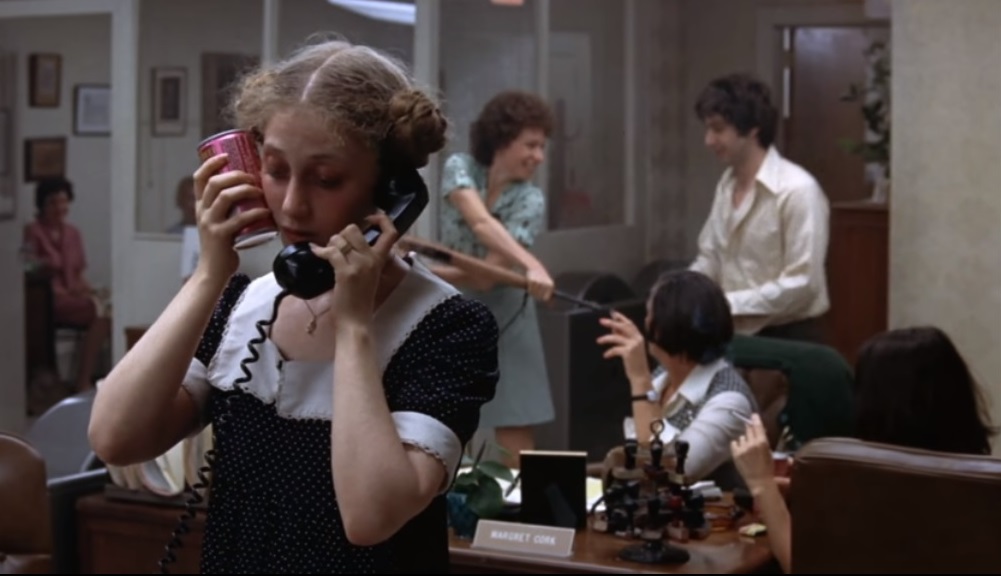
While Dog Day Afternoon was financed by a Hollywood studio, it seems very much a part of the New York school of filmmaking. In the 50s, independent filmmakers working in the city, like Morris Engel, Lionel Rogosin and John Cassavettes, tried to scrape away the gloss and glamour of commercial cinema to capture life as people really lived it. They shot on actual locations using hand-held cameras to capture the look and feel of urban life. In the late 60s and early 70s, Hollywood studios began to back projects that built on this approach, like Born to Win and Panic in Needle Park. Warner Bros. greenlighted Dog Day Afternoon at the peak of this trend. In the 70s American audiences seemed willing to explore the grittier side of urban life. But by the 80s, audiences were running back to safety, and Hollywood delivered a steady supply of comedies and action flicks.

Al Pacino’s performance has been highly praised, and rightly so. There’s a naked vulnerability in his portrayal of Sonny that’s unusual in American filmmaking. But while Pacino is at the center of the story, the film is really an ensemble effort, and even the performers in the smallest roles are vivid and lively. John Cazale is eerily introverted as Sonny’s partner, Sal. Sully Boyar plays the bank manager with an air of exhausted resignation. He just wants to make it through the day alive. Penelope Allen is especially vivid as one of the tellers. She may be a hostage, but she’s not going to let these guys push her around. But to me the most impressive thing about these performers is the way they’re always in character and they’re always connected. Pacino may be in the foreground, but Lumet makes sure that the actors in the background are reacting to whatever’s going on. And as the day drags on, as the tension grinds everybody down, they all seem to be drawing closer together.
As the cop who’s pretending to be in charge of the situation, Charles Durning gives us a man who knows he’s in over his head and is hoping he can bluff his way through this mess. James Broderick is quietly creepy as the stoic, implacable FBI man. He’s just waiting for the right moment to shut these guys down. And Chris Sarandon gives a moving performance as Leon. Sonny may be at the end of his rope, but so is Leon. They may love each other, but they know it’s not going anywhere.

One of the reasons the 70s was such an amazing period in American cinema was that a film this harsh, this gritty, this different, could be a success at the box office. Apparently Dog Day Afternoon resonated with audiences. It is a tense, engrossing film that holds up well today. But I think the reason audiences responded was that Pierson, Lumet and the cast made it a compelling human story. Ultimately it’s not about bank robbers and hostages. It’s about people.

Posted on October 16, 2024, in New York and tagged Al Pacino, Charles Durning, Chris Sarandon, Dede Allen, Frank Pierson, James Broderick, New York, Penelope Allen, Sidney Lumet, Sully Boyar, Victor Kemper. Bookmark the permalink. Leave a comment.
 Reality Is Scary
Leave a comment
Comments 0